
Performing arts students from West Nottinghamshire College were given a unique insight into the power of physical theatre by taking part in a specialist workshop led by an internationally-recognised theatre company.
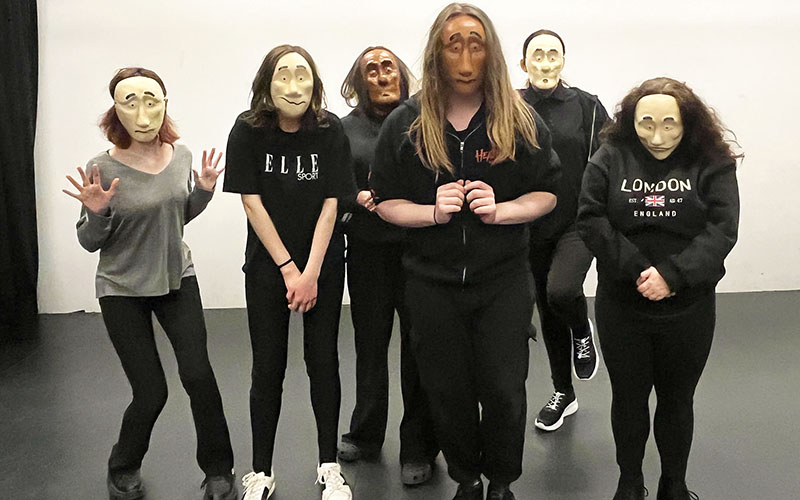
Students worked with confidence with the variety of masks.
Known around the world for its expressive approach to mask theatre, Trestle Theatre Company uses masks to help performers step beyond themselves and explore stories from entirely new perspectives. By removing the reliance on spoken dialogue, students discovered how movement, posture and gesture can communicate emotion just as powerfully as words.
Before working with the masks, students took part in a series of practical exercises designed to build essential performance techniques. One activity challenged them to communicate emotions such as joy, fear and frustration without speaking, relying only on facial expressions, body language and movement.
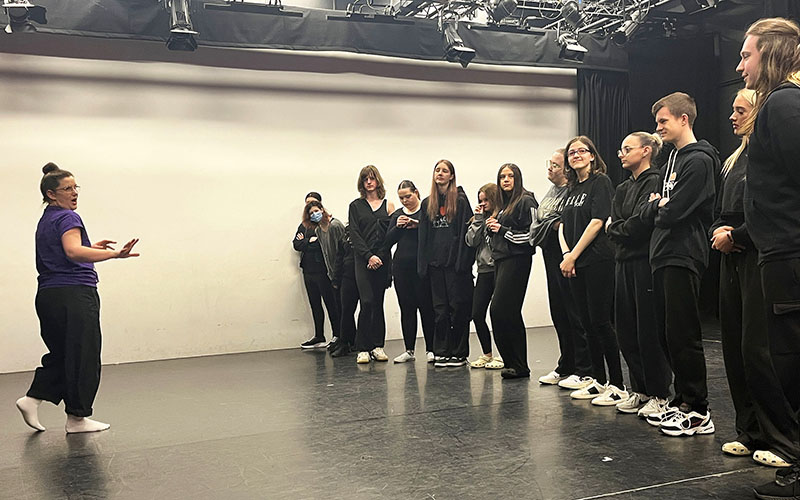
Helen led group activities which relied on not speaking.
The exercise encouraged students to think more deeply about how meaning is created on stage through body language and physical expression, spatial awareness within a performance space and audience interpretation of even the smallest gestures.
The workshop was led by Trestle practitioner Helen Barnett, who introduced students to the company’s history and creative approach. Founded in 1981, Trestle developed from the work of drama students inspired by influential theatre practitioner John Wright and has since become known for creating imaginative theatre rooted in storytelling and character exploration.
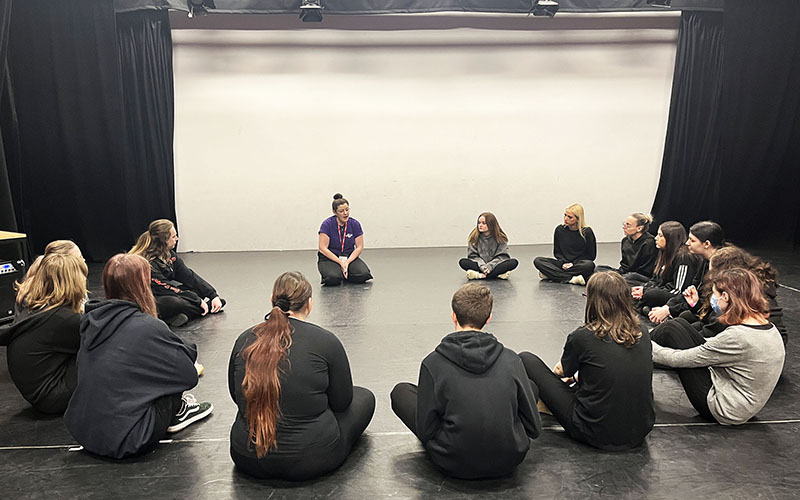
Trestle practitioner Helen Barnett introduced students to mask theatre.
Helen explained how Trestle masks draw on traditions from Greek and European theatre, where exaggerated features helped performers portray characters to large audiences. Rather than creating stereotypes, the masks are used to explore archetypes – universal character types and emotions that audiences instantly recognise.
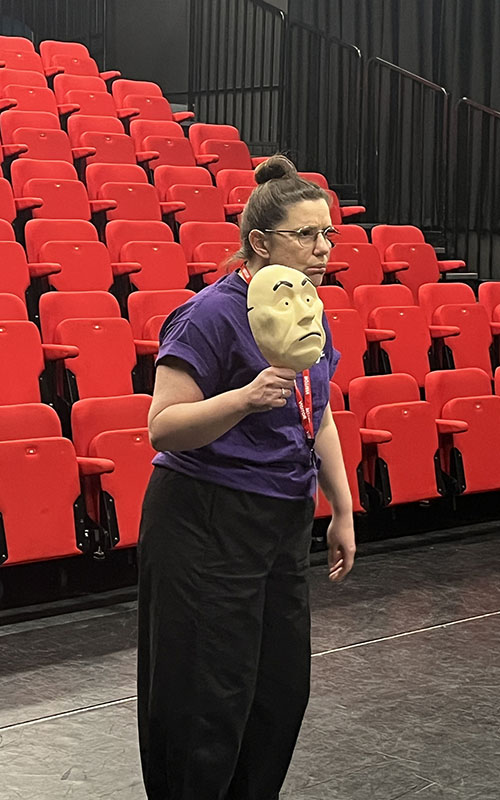
Helen detailed how masks draw on traditions from Greek and European theatre.
Once the masks were introduced, students were encouraged to fully embody their characters by making bold physical choices that matched the heightened style of the masks. With no moving mouth to rely on, communication depended entirely on movement, gesture and posture, sometimes supported by simple sounds instead of speech.
Working in groups, students experimented with creating short scenes using masks and props, exploring how characters might react to different situations. The masks quickly transformed the rehearsal space, helping students step outside their comfort zones and commit more fully to performance.
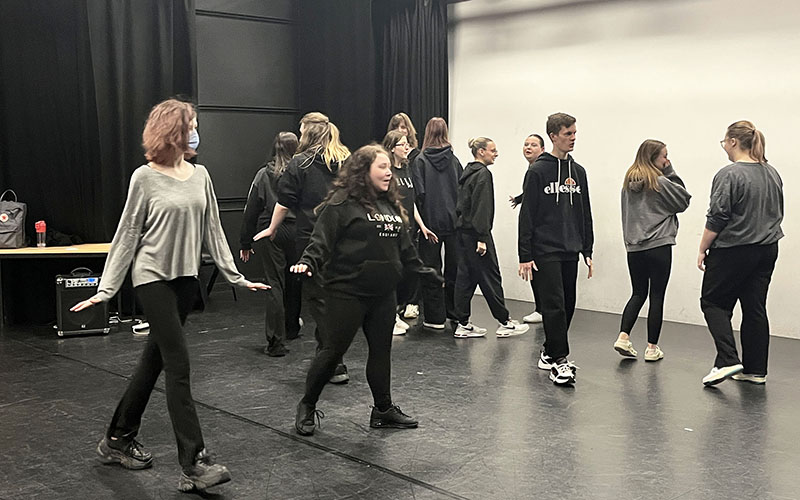
Students getting into character with their body language before the masks were tried.
Extended Diploma in Dance and Musical Theatre student Breanna Thompson, 18, said: “The workshop was a very good experience to learn the use of masks and the workshop leader explained how a story can be told with just your movements, expressions and bodies, which is needed in theatre no matter the genre or type of play.
“We engaged a lot with the activities and worked collaboratively to explore the different styles and stimuli given, such as creating a small scene with your mask on and a singular prop and how your character would react to the prop.
“Overall, another fantastic workshop and it has influenced us second years to take more of a look into the industry as there’s many career pathways.”
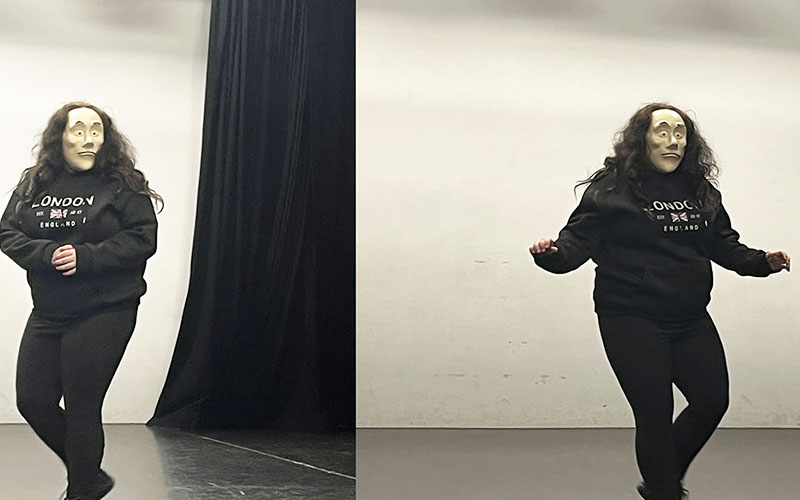
Masks at play.
Dale Shirtliffe, programme area leader for performing arts, said: “The Trestle workshop was really informative for students and enabled them to see how an industry group worked to create theatre from a purely physical point of view, without relying on their voice and facial expressions.
“Helen kept the students really engaged throughout the session, moving through the different tasks seamlessly, meaning the students were able to apply the skills immediately, working with confidence both with and without the masks, creating some lovely moments throughout.
“Many of students spoke of the benefits of the workshop, and the inherent skills would have, not only on their development as a performer, but also on their current units and assessments. They’ll be able to link the movement skills to the creation of their pieces of theatre.”
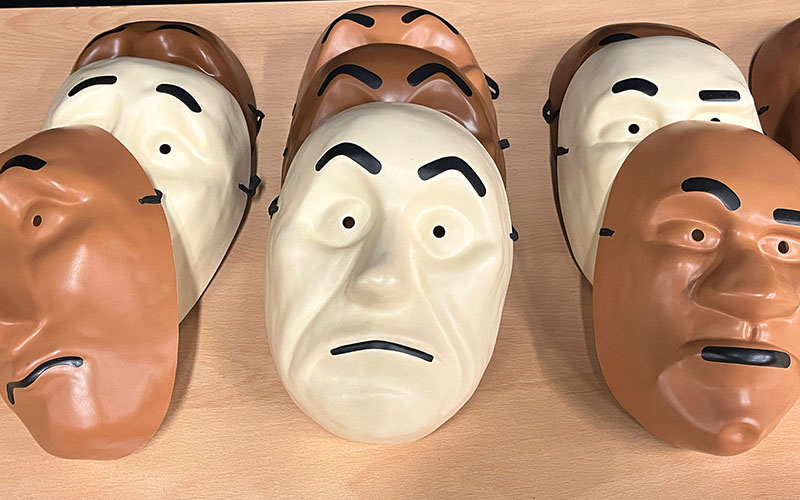
There was an array of expressions to choose from.